How to Structure Your Google Ad Grant Account for Maximum Performance
The difference between a Google Ad Grant that spends $300/month and one that spends $10,000/month often comes down to account structure. Not bid strategies, not keywords, not ad copy. Structure.
A well-organized account lets Google match the right ad to the right search at the right time. A poorly organized account forces generic ads on specific searches, tanks Quality Scores, lowers CTR, and leaves most of your budget unspent.
This guide shows you how to build an account structure that drives performance from day one, whether you're starting fresh or restructuring an existing account.
Key Takeaways - Organize campaigns by objective (donations, volunteering, programs, awareness, brand) - Create tightly themed ad groups with 5-15 closely related keywords each - Every campaign gets a $329/day budget; the account cap prevents overspending - A brand campaign is mandatory for CTR health - Aim for 5-10 campaigns, 3-5 ad groups per campaign
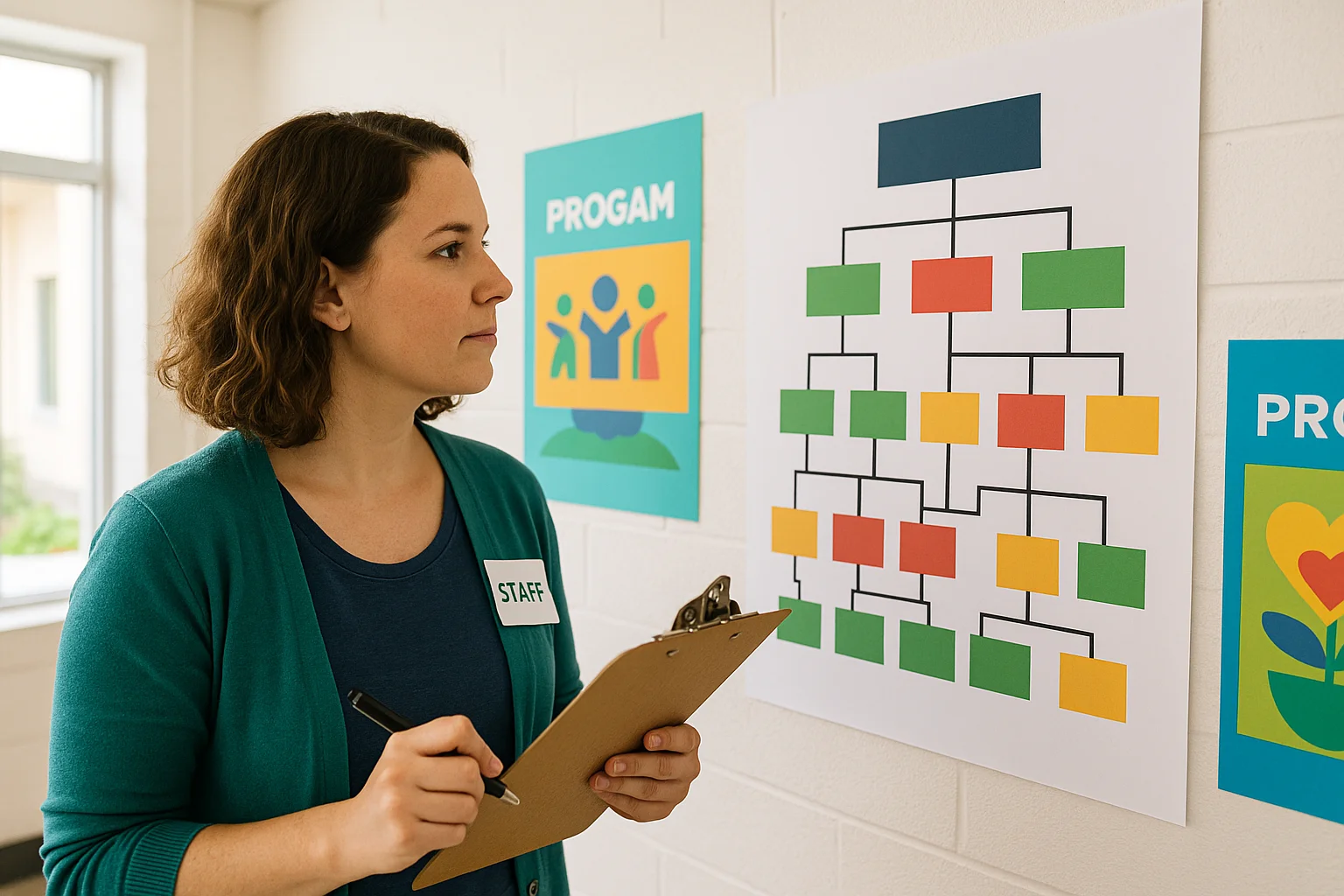
The Three Levels of Account Structure
Google Ads accounts are organized in three hierarchical levels:
Campaigns (top level): Each campaign has its own budget, bid strategy, geographic targeting, and ad schedule. Think of campaigns as major organizational goals.
Ad groups (within campaigns): Each ad group contains a set of keywords and the ads that show for those keywords. Think of ad groups as specific themes within a goal.
Keywords and ads (within ad groups): The actual terms you're targeting and the ads people see when they search.
The key principle: the tighter the connection between keyword, ad, and landing page within an ad group, the better everything performs. Quality Score goes up, CTR goes up, conversions go up, and budget utilization goes up.
Recommended Campaign Structure
Every Grant account should have at minimum these campaigns:
1. Brand Campaign (Mandatory)
Purpose: Capture searches for your organization's name. Protects your 5% CTR because brand searches convert at 30-60% CTR.
Keywords: Your organization name, abbreviations, common misspellings, "about [org name]," "[org name] near me"
Budget: $329/day Bid strategy: Maximize Conversions
2. Core Services/Programs Campaign(s)
Purpose: Reach people searching for the specific services your nonprofit provides.
Keywords: Service-specific terms, program names, "free [service] near me," "[program] registration"
Create one campaign per major program area if your organization has multiple distinct services. A food bank and job training nonprofit might have separate campaigns for each.
3. Donation/Fundraising Campaign
Purpose: Capture high-intent giving searches.
Keywords: "Donate to [cause]," "[cause] charity," "support [cause]," "give to [cause] [location]"
Landing page: Your donation page directly.
4. Volunteer Recruitment Campaign
Purpose: Attract volunteer sign-ups.
Keywords: "Volunteer [location]," "volunteer opportunities [cause]," "how to volunteer for [cause]," "weekend volunteering"
Landing page: Your volunteer information and sign-up page.
5. Education/Awareness Campaign
Purpose: Drive traffic to educational content about your cause area. This is often the highest-volume campaign and the key to spending your full budget.
Keywords: "What is [cause]," "how to [cause-related action]," "[cause] statistics," "[cause] resources"
Landing page: Blog posts, resource pages, FAQ content.
6. Performance Max Campaign
Purpose: Reach people on Google Maps and through AI-driven Search matching.
Setup: See our PMax setup guide. No keywords needed; uses audience signals instead.
Optional Campaigns
- Events: For seasonal or specific event promotion
- Local services: If you have multiple locations, separate campaigns per location
- Specific programs: Individual campaigns for distinct programs with their own audiences
Building Effective Ad Groups
Within each campaign, create ad groups that represent specific keyword themes. The golden rule: every keyword in an ad group should be close enough in meaning that a single set of ad headlines can be genuinely relevant to all of them.
Example: Volunteer Recruitment Campaign
| Ad Group | Keywords | Ad Theme |
|---|---|---|
| Weekend Volunteering | "weekend volunteer opportunities," "volunteer on Saturday," "Sunday volunteering near me" | Headlines about weekend availability |
| Youth Volunteering | "volunteer opportunities for teens," "high school community service," "student volunteer" | Headlines about youth programs |
| Corporate Volunteering | "corporate volunteer programs," "team volunteering events," "company community service" | Headlines about group/team activities |
| General Volunteering | "volunteer near me," "how to volunteer," "volunteer opportunities [city]" | Headlines about getting started |
Each ad group has 5-15 keywords, all tightly related. The ad copy in each ad group speaks directly to that specific audience.
How Many Keywords Per Ad Group?
| Count | Assessment |
|---|---|
| 1-3 | Too few; won't generate enough data for optimization |
| 5-15 | Ideal range; tight enough for relevance, broad enough for volume |
| 15-25 | Acceptable if keywords are truly related |
| 25+ | Too many; split into multiple ad groups |
Budget and Bid Strategy Configuration
Budget: Set every campaign to $329/day. The account-level daily cap prevents overspending. This gives Google maximum flexibility to allocate budget where opportunities exist.
Bid strategy: Maximize Conversions for most campaigns. Switch to Target CPA once a campaign accumulates 30+ conversions in 30 days.
Putting It All Together: Complete Structure Example
Here's a complete account structure for a mid-sized environmental nonprofit:
Campaign 1: Brand
- Ad Group: Organization Name (exact + phrase match variations)
Campaign 2: Programs - Tree Planting
- AG: Local Planting Events ("tree planting volunteer [city]," "plant trees near me")
- AG: Corporate Planting ("corporate tree planting," "team building tree planting")
- AG: School Programs ("school tree planting program," "environmental education field trip")
Campaign 3: Programs - Conservation Education
- AG: Adult Workshops ("conservation workshop [city]," "environmental education classes")
- AG: Youth Programs ("nature camp for kids," "environmental summer camp")
- AG: Online Resources ("how to reduce carbon footprint," "sustainable living tips")
Campaign 4: Donations
- AG: Cause Donations ("donate to environment," "environmental charity," "support conservation")
- AG: Specific Projects ("sponsor a tree," "fund conservation project," "earth day donation")
Campaign 5: Volunteers
- AG: General Volunteering ("environmental volunteer [city]," "conservation volunteer")
- AG: Specific Skills ("volunteer photographer nature," "environmental data volunteer")
Campaign 6: Awareness
- AG: Climate Education ("climate change facts," "how to fight climate change")
- AG: Local Environment ("[city] environmental issues," "local conservation efforts")
- AG: Wildlife ("endangered species [region]," "how to help wildlife")
Campaign 7: PMax
- Asset group with creative assets, audience signals
Total: 7 campaigns, 15 ad groups, targeting 200+ keywords. Each ad group has custom RSAs matched to its theme and sends traffic to the most relevant page on the website.
Common Structural Mistakes
The "one campaign" trap. Everything in a single campaign. Google can't optimize budget across goals, and ad relevance is impossible.
The "junk drawer" ad group. 50 unrelated keywords in one ad group. Quality Scores plummet because the ad copy can't match all keywords.
Missing brand campaign. Without brand terms driving 30-60% CTR, your account CTR is at constant risk of dropping below 5%.
Identical ad copy across all ad groups. If every ad group has the same headlines and descriptions, you're losing the relevance advantage that separate ad groups provide.
Homepage as the landing page for everything. Each campaign theme should have a corresponding page on your website. See our landing page optimization guide.
Audit Your Account Structure with GrantMax
GrantMax evaluates your campaign organization, ad group themes, keyword-to-ad relevance, and overall structure. See exactly where your structure is limiting performance and get prioritized recommendations.
Audit My Account Structure - Free
Prefer to hand it off to an expert? Our Google Ad Grant management services include complete account restructuring. Explore Grant Services
Frequently Asked Questions
How many campaigns should I have? 5-10 is ideal for most nonprofits. Fewer than 3 usually means you're cramming too many goals into one campaign. More than 15 becomes difficult to manage without dedicated resources.
Should I restructure my existing account or start fresh? If your existing account has historical conversion data, restructure rather than starting over. The algorithm's learning from past data is valuable. Pause underperforming campaigns, reorganize keywords into better ad groups, and build new campaigns alongside existing ones.
Does account structure differ by country? The principles are identical globally. The specific campaigns and keywords differ based on your programs and audience, but the organizational approach (campaigns by goal, tight ad groups, matched landing pages) works everywhere.
Can I change my structure after launching? Yes. Account structure should evolve. Start with a solid foundation, then add campaigns as you identify new opportunities, split ad groups that become too broad, and pause campaigns that underperform.
Key Takeaways
- Campaigns = organizational goals: brand, services, donations, volunteering, awareness, PMax
- Ad groups = specific themes within each goal, with 5-15 tightly related keywords each
- Every ad group gets custom RSAs that match its keyword theme
- Every campaign gets $329/day budget with Smart Bidding
- A brand campaign is non-negotiable for CTR compliance
- Tight keyword-ad-landing page alignment drives Quality Score, CTR, and conversions
- 5-10 campaigns with 3-5 ad groups each is the sweet spot for most nonprofits
Published: March 2026 | Last Updated: March 2026 | Author: GrantMax Category: Getting Started | Tags: Account Setup, Strategy